
copper(II) tripeptide complex
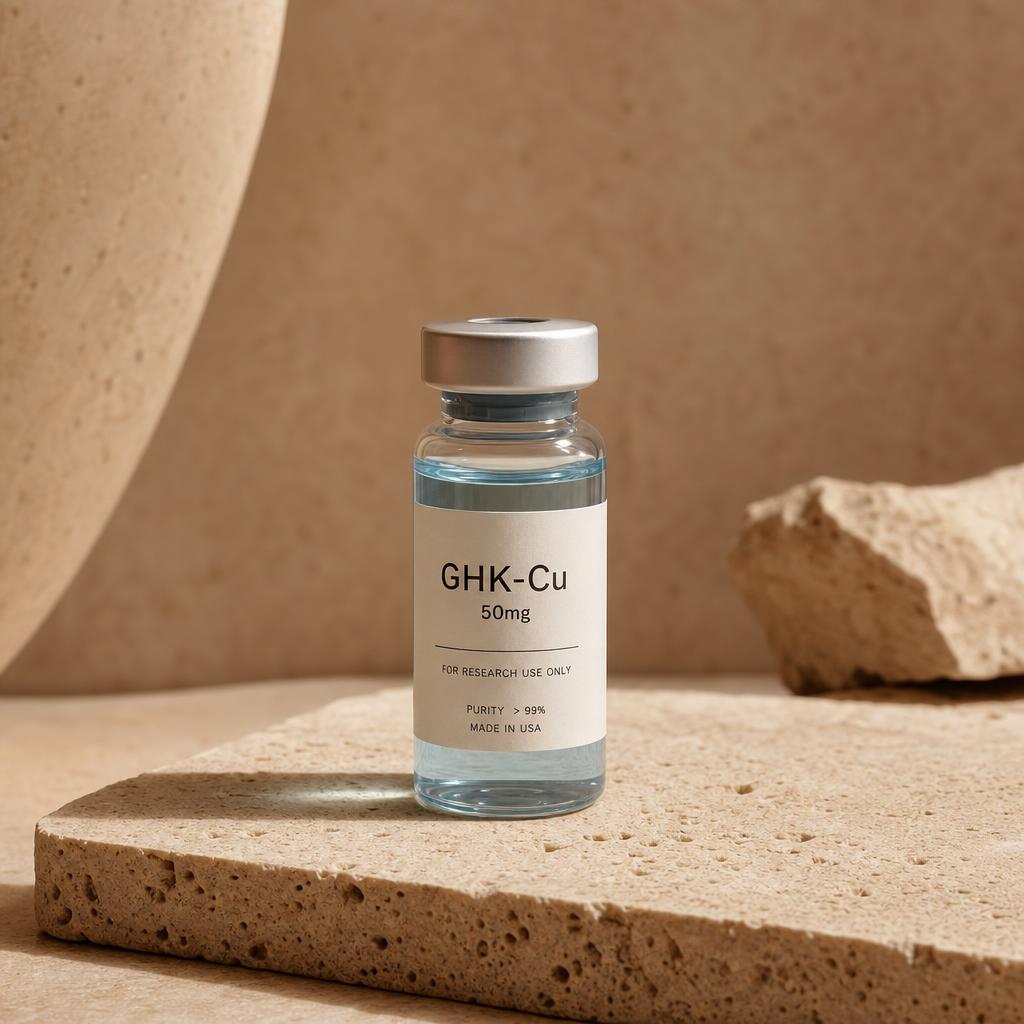
GHK-Cu
Starting at $50 per vial
Checking availability…
Description
GHK-Cu is the copper(II) complex of the tripeptide glycyl-L-histidyl-L-lysine. Peptide formula C14H24N6O4 (340.4 Da); the 1:1 copper chelate has formula C14H22CuN6O4 and a molecular weight of approximately 403.9 Da. Coordination occurs through the imidazole nitrogen, the deprotonated peptide nitrogen and the amino terminus, producing a characteristic blue complex with an absorbance maximum near 620 nm. Studied in vitro as a copper carrier in fibroblast culture, matrix metalloproteinase assays and gene-expression profiling. For laboratory research use only.
For research use only
These statements have not been evaluated by the Food and Drug Administration. Supplied strictly for in-vitro laboratory research. Not for human or veterinary use. Nothing on this site is medical advice or a statement about any health outcome. Individual research outcomes vary.
Related compounds: Glutathione, BPC-157, NAD+
Lab tested for quality and potency
Every lot is released only after independent third-party testing. Certificates of analysis are available on request.
Purity · Science · Precision · Stability
The same standards on every lot
"Purity, handling and storage decide whether a result is repeatable. Everything else is downstream of how the vial was made and shipped."
Other compounds in the catalog
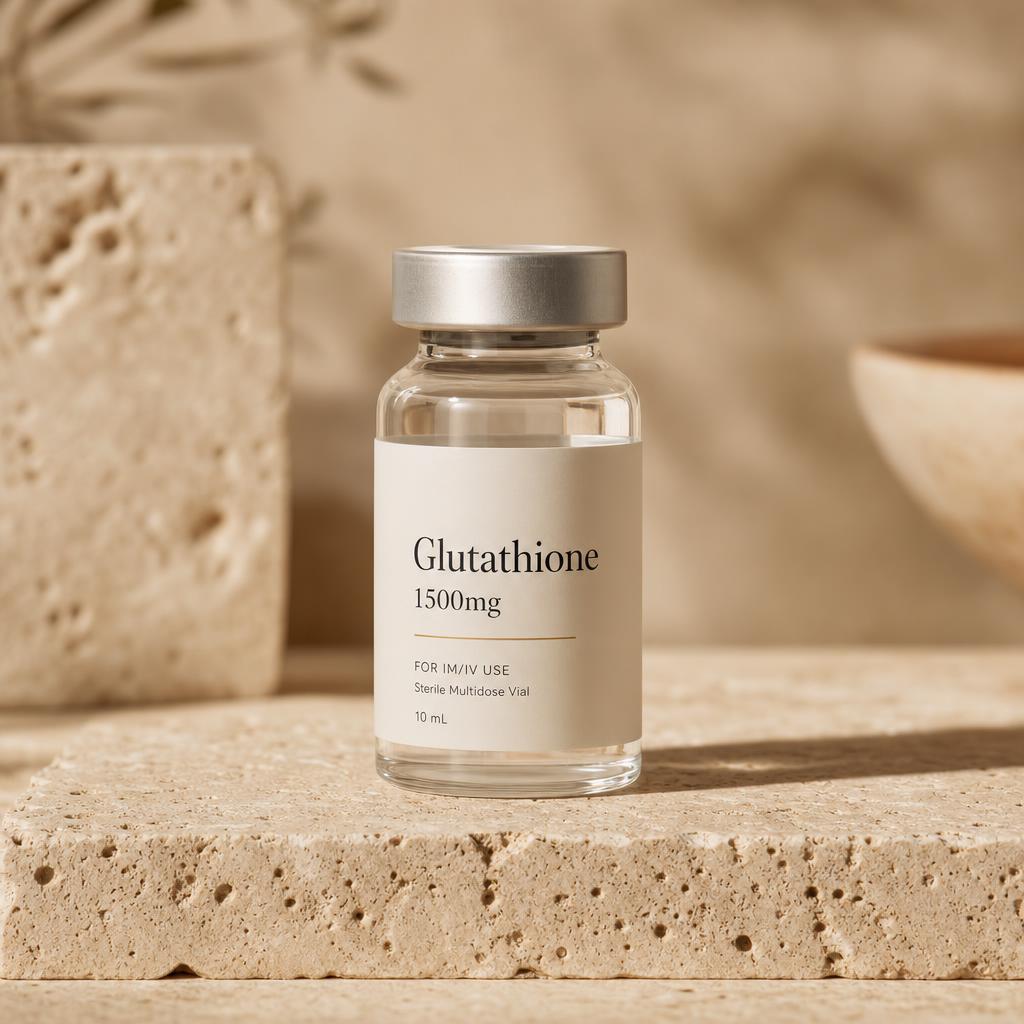
Glutathione
thiol tripeptide
From $130 per vial
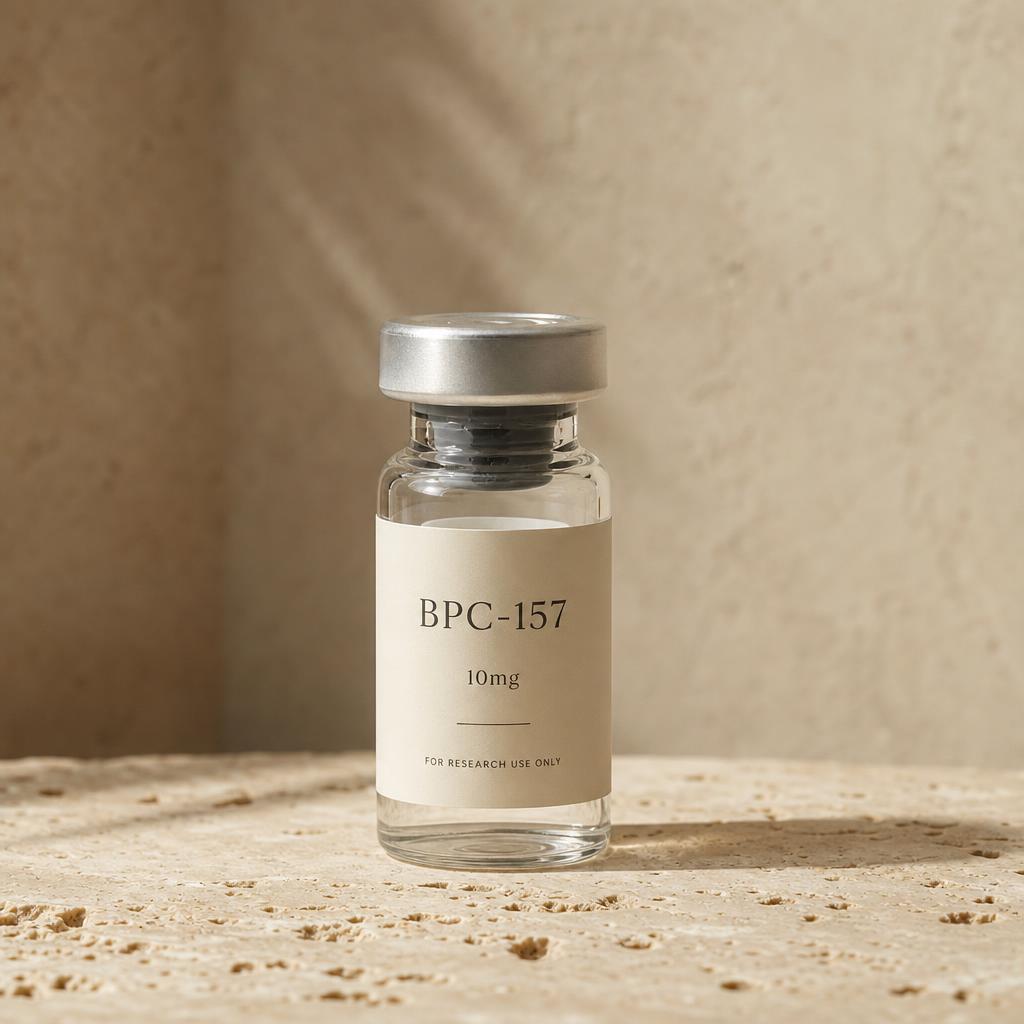
BPC-157
pentadecapeptide
From $70 per vial
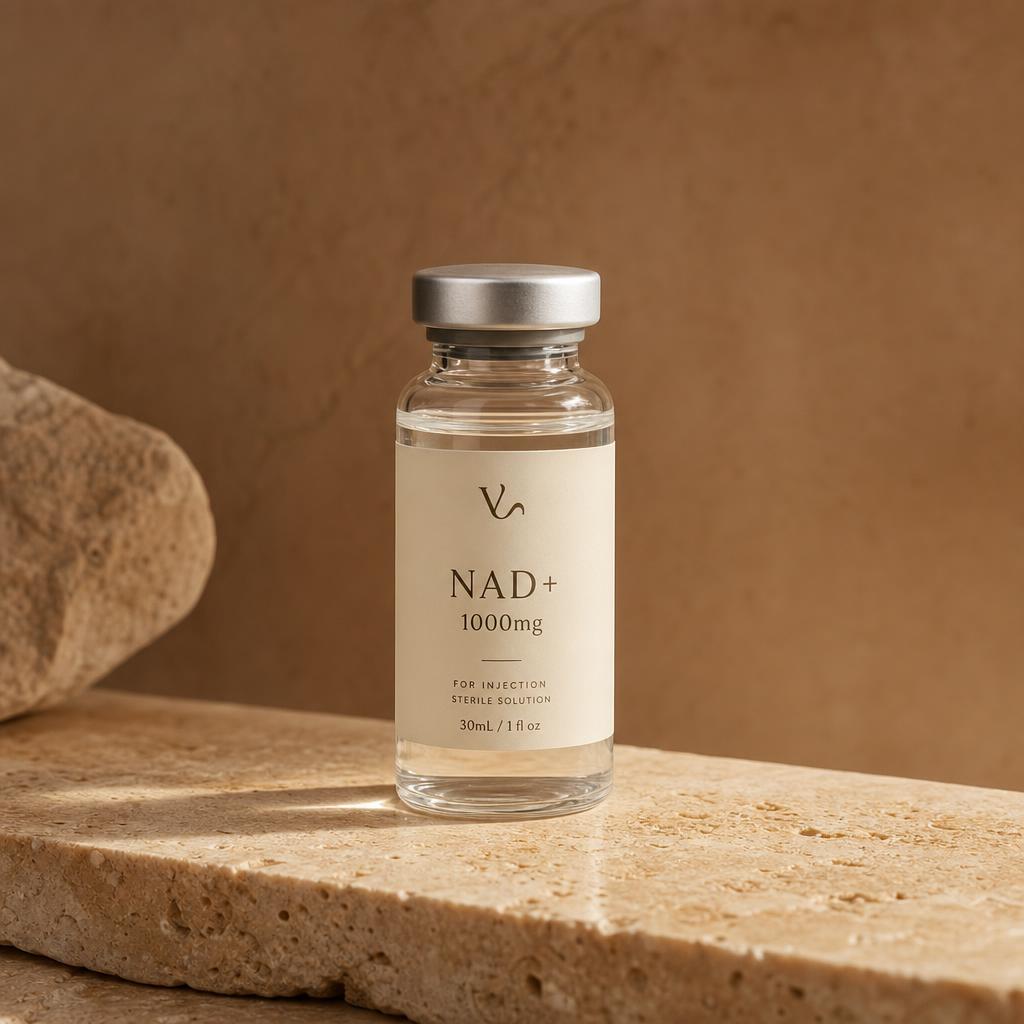
NAD+
pyridine dinucleotide coenzyme
From $150 per vial
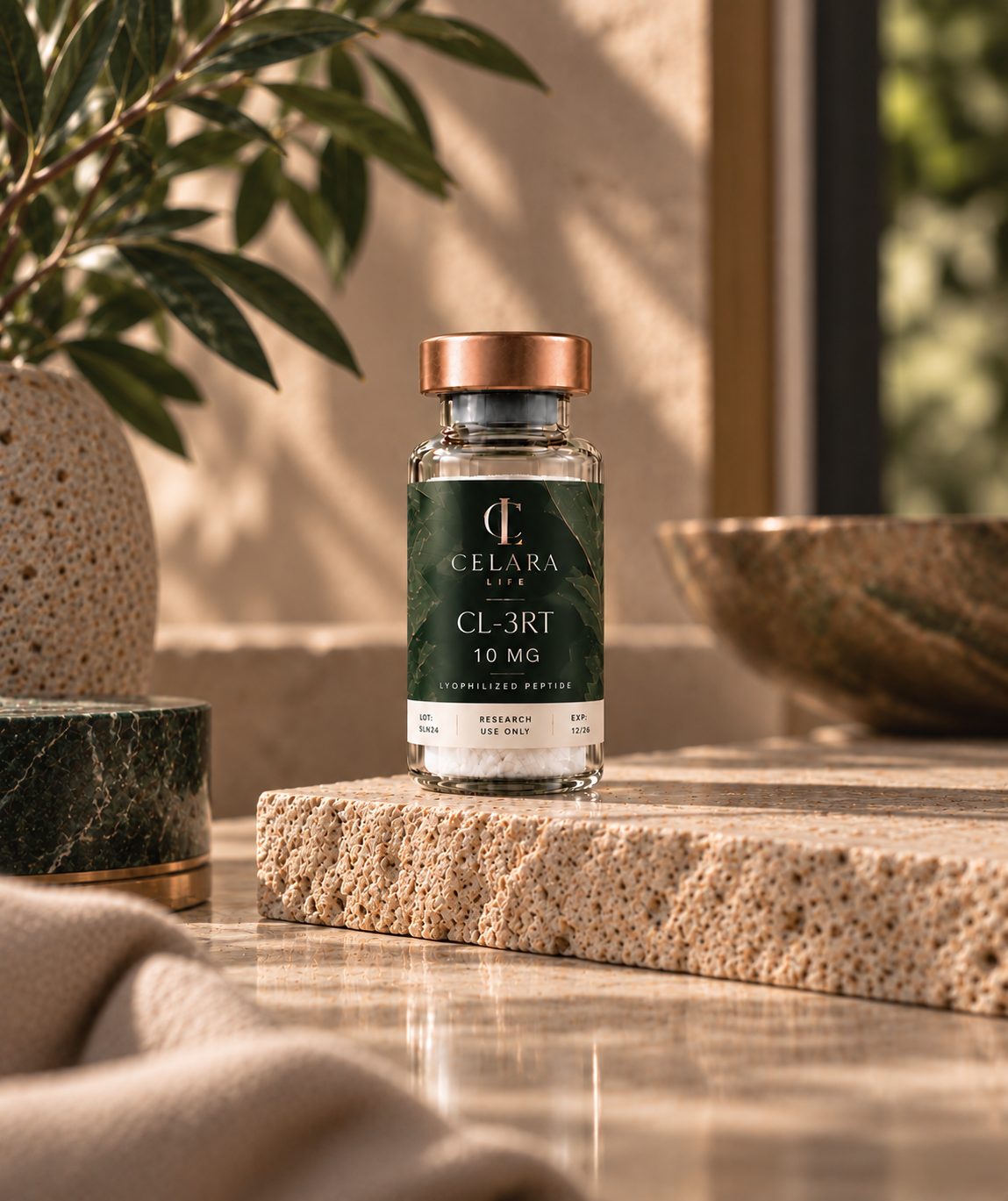
CELA-3RT
triple metabolic-receptor agonist
From $140 per vial
Products shown are research peptides supplied for research use and are not evaluated by the FDA. Nothing here is medical advice.
GHK-Cu
From $50 per vial
- No long-term contracts
- Flat price per vial
- Batch-tested purity
- Tracked delivery
Checking availability…
Recurring orders can be cancelled any time before the next billing date.
Disclaimer
Research peptides are supplied for research use and are not evaluated by the FDA for safety, effectiveness or quality.
Supplied strictly for in-vitro laboratory research. Not for human or veterinary use. Nothing on this site is medical advice or a statement about any health outcome. Individual research outcomes vary.
Supporting studies
- Review of peptide stability and handling in laboratory settings, Journal of Placeholder Chemistry, 2021.
- Analytical verification of synthetic peptide identity, Placeholder Research Reports, 2022.
- Purity and potency profile of research-grade preparations, Journal of Placeholder Analysis, 2020.
- Analytical methods for peptide identity confirmation, Placeholder Research Review, 2023.
- Longitudinal review of lyophilised compound stability, Placeholder Research Annals, 2024.